Vehicle Prep for Colorado Weekend Adventures | Legacy Automotive
Before You Tow, Camp, or Climb: Vehicle Prep for Weekend Adventures
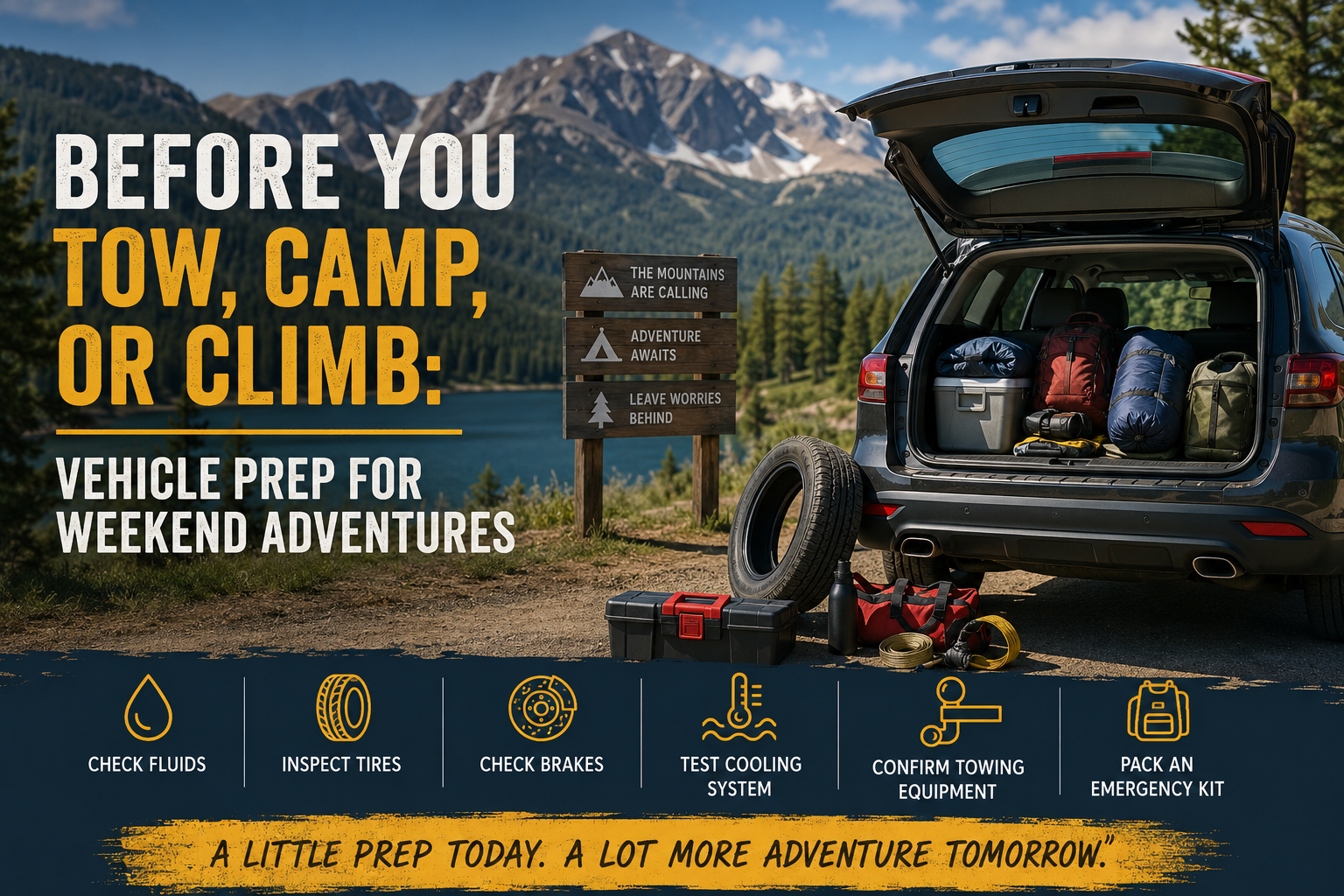
Colorado weekends have a way of turning into adventures fast. One minute you’re loading coolers and camping chairs, and the next you’re climbing a steep mountain pass, towing a trailer, or bouncing down a dusty road toward a trailhead.
That kind of driving asks more from your vehicle than a normal commute. Heat, elevation, heavy loads, steep grades, rough roads, and long stretches without service stations can all expose small problems before you expected them.
Before your next camping trip, towing weekend, or mountain drive, here are a few important things to check.
Start With the Basics: Fluids, Leaks, and Warning Lights
Before any longer drive, take a few minutes to look under the hood and under the vehicle. You do not need to be a mechanic to spot obvious warning signs.
Check for:
- Low engine oil
- Low coolant
- Brake fluid concerns
- Windshield washer fluid
- Visible leaks under the vehicle
- New dashboard warning lights
- Burning smells or unusual noises
Colorado mountain driving can put extra heat and stress on your engine, transmission, and brakes. If your vehicle is already low on coolant or has a small leak, a long climb can turn that small issue into an overheated engine.
If a warning light is on before the trip, do not assume it can wait until after the weekend. Have it checked before you head out.
Tires Matter More Than You Think
Your tires are one of the most important safety items on your vehicle, especially when your weekend includes mountain roads, dirt access roads, rain, gravel, or towing.
Before leaving, check:
- Tire pressure, including the spare
- Tread depth
- Cracks, bulges, or uneven wear
- Whether your tires are appropriate for the roads you plan to drive
- Lug nuts if wheels were recently removed or serviced
Tire pressure can change with temperature and elevation. A tire that looks “fine” in the driveway may be underinflated once the vehicle is loaded with gear, passengers, bikes, or towing weight.
Do not forget the spare. A flat tire is frustrating. A flat tire with a flat spare is a much bigger problem.
Towing? Your Vehicle Needs More Than “It Can Pull It”
Just because a vehicle can move a trailer does not mean it is ready to tow safely.
Before towing, confirm your vehicle’s towing capacity in the owner’s manual and make sure the trailer, cargo, passengers, and gear stay within the manufacturer’s limits. Overloading can strain the engine, transmission, suspension, tires, and brakes.
Also check:
- Trailer lights
- Brake lights and turn signals
- Trailer tire condition and pressure
- Hitch connection
- Safety chains
- Trailer brake function, if equipped
- Load balance and tongue weight
Towing in Colorado often means climbing, descending, and dealing with changing weather. That makes brake condition especially important. If your brakes are squeaking, pulsing, grinding, or feeling soft, get them inspected before towing.
Brakes Take a Beating on Mountain Roads
Going up the mountain is only half the trip. Coming back down is where your brakes do a lot of work.
Steep descents can cause brakes to heat up quickly, especially when the vehicle is packed with gear or pulling a trailer. If you notice vibration, grinding, a burning smell, or a brake pedal that feels different than usual, it is time for a professional inspection.
A good pre-trip inspection can help identify worn pads, rotor issues, fluid concerns, or other problems before you are relying on your brakes on a long downhill grade.
Do Not Ignore the Cooling System
Engines work harder at higher elevations and on steep climbs. Add summer heat, stop-and-go mountain traffic, or a loaded vehicle, and your cooling system becomes even more important.
Watch for signs like:
- Temperature gauge rising
- Coolant smell
- Steam from under the hood
- Coolant puddles
- Heater suddenly blowing cold air when the engine is hot
If your vehicle has a history of overheating, do not gamble on a mountain trip. Cooling system issues can become expensive quickly if they are ignored.
Pack Smart, Not Just Heavy
It is easy to overload a vehicle before a camping trip. Coolers, firewood, water, tents, tools, bikes, roof boxes, and passengers all add weight.
Too much weight can affect:
- Braking distance
- Steering control
- Tire wear
- Suspension
- Fuel economy
- Transmission temperature
Check your owner’s manual for payload limits, especially if you are also towing or using a rooftop cargo carrier. Secure loose items so they do not shift during sudden stops or rough-road driving.
Rough Roads Can Reveal Weak Suspension Parts
Many Colorado adventures involve dirt roads, washboards, potholes, rocks, or uneven trailhead parking areas. Even if you are not off-roading, rough roads can be hard on suspension and steering components.
Have your vehicle checked if you notice:
- Clunking over bumps
- Pulling to one side
- Steering wheel vibration
- Uneven tire wear
- Bouncy or unstable handling
- Fluid leaking near shocks or struts
Your vehicle does not need to be a rock crawler to deserve a suspension check. A safe, stable ride matters on paved highways and dirt roads alike.
Bring a Basic Emergency Kit
Even a well-maintained vehicle can run into surprises. A simple emergency kit can make a long delay safer and less stressful.
Consider packing:
- Jumper cables or a jump pack
- Tire pressure gauge
- Flashlight
- First-aid kit
- Water
- Blanket or extra layers
- Phone charger
- Basic tools
- Reflective triangles or road flares
- Owner’s manual
- Paper map or downloaded offline map
In Colorado, conditions can change quickly. Sunshine at home does not always mean clear weather at elevation.
Schedule a Pre-Trip Inspection Before the Adventure
A pre-trip inspection is one of the easiest ways to reduce stress before a weekend away. It gives a technician a chance to check the items that matter most for safety and reliability, including tires, brakes, fluids, belts, hoses, battery condition, suspension, lights, and visible leaks.
That does not mean every vehicle needs major service before a trip. Sometimes the best news is knowing everything looks good before you head out.
Enjoy the Drive, Not the Breakdown
Weekend adventures should be remembered for the views, the campfire, the trail, or the time with family—not for waiting on the shoulder with an overheated engine or a flat spare.
Before you tow, camp, climb, or explore, give your vehicle a little attention. Legacy Automotive can help inspect your vehicle before your next Colorado road trip so you can head out with more confidence.
Call Legacy Automotive today to schedule a pre-trip inspection before your next weekend adventure.
FAQ
Do I really need a vehicle inspection before a short weekend trip?
It is a smart idea, especially if you are driving into the mountains, towing, carrying extra weight, or taking a vehicle that is due for maintenance. Small issues can become bigger problems under added stress.
What is the most important thing to check before towing?
Start with your vehicle’s towing capacity, trailer weight, tire condition, brakes, lights, hitch connection, and load balance. Your owner’s manual is the best place to confirm vehicle-specific limits.
Why does mountain driving wear brakes faster?
Mountain driving often includes long downhill grades, which require more braking. Heat buildup can accelerate wear and reduce braking performance, especially with heavy loads.
Should I check tire pressure before or after loading the vehicle?
Check it before you leave, ideally when the tires are cold. Also confirm the correct pressure listed for your vehicle, and do not forget the spare tire.
What should I do if my temperature gauge rises while climbing?
Turn off the A/C, reduce load if possible, and safely pull over if the gauge continues rising. Do not remove the radiator cap while the engine is hot. Have the vehicle inspected before continuing if overheating occurs.